

According to No Visible Bruises: What We Don’t Know About Domestic Violence Can Kill Us, by Rachel Louise Snyder, domestic violence is the “second leading cause of death for African American women, third leading cause of death for native women, seventh leading cause of death for Caucasian women,” and the United Nations Office on Drugs and Crime reported that “home is the most dangerous place for a woman.”
Domestic violence affects men and women alike. It impacts people from all walks of life—rich and poor, doctors and lawyers, military families, police officers, people with Ph.Ds. and those with a high school diploma are all at risk.
If you fall in love with someone who has a propensity toward violence and control, you are at risk. If you’re thinking about getting a domestic violence restraining order, the steps you take from here can often be more than just a matter of safety, security, and peace of mind—they can be a matter of life and death.
Snyder notes that “dangerousness” in domestic violence “spiked when a victim attempted to leave an abuser, and it stayed very high for three months, then dipped only slightly for the next nine months. After a year, the dangerousness dropped off.”

It’s important to note, however, that a domestic violence restraining order is just a piece of paper. It cannot stop a fist or a bullet. It is often one crucial part of a safety plan designed to help you (and your children, and pets, if you have them), stay safe (and seek safety) during the critical early months while you’re building a life independent of your abuser.
If you are currently researching how to seek a domestic violence restraining order (protection order), it is important to keep in mind that your internet use can be monitored as you research your options. Domestic violence restraining orders (protection orders) are often most effective when used in conjunction with a safety plan.
When it comes to deciding whether to file a protection order, it’s important to trust your gut. You know your former partner best and you are the best expert on your own safety. Some effective safety plans may not include a domestic violence restraining order at all but may involve moving you and your children or pets to an undisclosed location—or to a safe one.
The risk of domestic violence escalates when a person tries to leave their abuser, or when abusers feel like they are losing control of their partner. Coercive control and domestic violence can be a confusing experience. Things can be perfectly fine, even ideal, one day, and then terrifying or disorienting the next, when your partner gets angry or acts out. It can sometimes be difficult to get a sense of your own risk when you’re in the middle of a highly volatile situation.
Johns Hopkins University offers a danger assessment here, where you can answer questions about your relationship and get a sense of your own risk. Certain factors can put you at greater risk of homicide or extreme violence, and this risk assessment is designed to identify these factors. Understanding where you stand in terms of risk can help inform your decision-making process. The safety assessment alone, however, cannot always accurately indicate your level of risk.
Escalation of violence is also an important red flag for increased risk, and violence needs to be considered on a timeline. An example of this would be when a partner who previously verbally and emotionally abused you, has now become physically violent. Presence of a gun, knife, or other deadly weapon in the home could also increase your risk. And if your partner put his or her hands on your neck (even if he or she left no marks or visible bruises), you should consider yourself at very high risk.
Talking to someone can help.
There can be a great deal of shame surrounding abuse and violence. Abusers often manipulate victims into believing that everything is their fault. If you haven’t told anyone in your life that you are experiencing abuse and violence, speaking to someone you trust or to a professional can be your first step in breaking free.
The National Domestic Violence Hotline offers free support 24 hours a day, 7 days a week at 1-800-799-7233. You can also text START to 88788. Individuals at this organization can help you develop a safety plan, help you decide whether you want to move forward with a protection order, and connect you to local and community domestic violence resources. You can also access King County domestic violence resources by visiting this website.
It can take many attempts to leave an abusive relationship. Breaking free of patterns of coercive control and violence takes immense courage. If you are scared, you are not alone.
Threats, intimidation, financial abuse, and concerns for children and pets are all valid reasons why people stay in abusive relationships. If your abuser didn’t leave visible bruises, it can sometimes be very difficult to secure a conviction or jail time.
Community resources and professional organizations can help you seek shelter, receive financial support, and help you protect your children and pets when leaving an abusive relationship. A domestic violence restraining order, or protection order, will often be just one piece of a comprehensive safety plan. You can love someone and still choose to leave, and it’s a very normal experience for victims of domestic violence to still love the person who abuses them.
A protection order can make it a crime for a person who has abused you to show up at your home, your place of employment, your school, or your children’s school or day care. A domestic violence restraining order might also require your former partner to seek mental health treatment or seek an evaluation for a chemical dependency.
A protection order can also prevent your former partner from selling shared assets and put a stop to abusive litigation if your former partner is trying to use the court system to take your children or drag you through a costly divorce. Finally, a protective order can give you temporary custody of your children and give you custody of your pets.
In this article, we’ll offer a step-by-step guide to getting a domestic violence restraining order (known as a protection order in Washington state) and also explore some things you might want to explore or consider before filing.
- How to Get a Protection Order (Domestic Violence Restraining Order)
- Things to Consider Before Filing for a Protection Order (Domestic Violence Restraining Order)
- Do I Need a Protection Order?
- Legal and Personal Risks of Filing a Protection Order

How to Get a Protection Order (Domestic Violence Restraining Order)
To receive a domestic violence restraining order, you’ll need to file for the protection order (usually you’ll file at the court closest to where you currently live or where you have taken shelter). You’ll also need to attend a hearing.
- First, decide where and how to file. You can file for a protection order in the county where you currently live, or the county where you previously lived if you had to move to avoid abuse. You can also file at the court that is closest to where you currently live. If you are a member of a tribe, you may also have the option of filing the protection order with your tribal court.
- Fill out the protection order paperwork, thoroughly. You can download paperwork and instructions here. Gather all the reasons why you are seeking a protection order, and paperwork documenting these reasons. Police investigations, police records, records of assault, medical records, photos of injuries, and witness statements can all be helpful.
Filing for a protection order can be challenging if your abuser was careful to leave no visible marks or evidence of assault on your body, or if your abuser was able to evade arrest or incarceration. In this case, it could be helpful to provide evidence of coercive control, threats, and written witness statements. Here are some additional things you’ll need to consider when filling out protection order paperwork:
- Decide whether you want to keep your current address private. Again, a protection order is often just one piece of a larger safety plan. Your former partner will be able to read all information you provide in your protection order paperwork.
If you want to keep some things private, like your address or medical records, you’ll need to specifically ask that these be sealed (made private). If you don’t want your former partner to know where you live, you might want to keep your current address under seal.
- Decide whether you’ll need immediate protection. If you believe “serious, immediate harm or irreparable injury could occur if an order is not issued immediately” you can request that the protection order go into effect immediately (before a hearing takes place).
You’ll need to explain why you have reason to believe that serious harm or irreparable injury could occur if the order isn’t put into immediate effect. You’ll still need to attend a hearing to extend a temporary order or to make a temporary order permanent. A domestic violence advocate or family lawyer can help you fill out this section. You could also provide the results of your Johns Hopkins University Danger Assessment.
- Decide what kind of protections you want. You can ask the court for no contact from your abuser, ask the court for protection from stalking behavior, or ask the court to require that your abuser remain within 1,000 feet away from you, your home, your workplace, and your children’s school.
If your concern involves revenge porn or the fact that your abuser possesses your intimate images, the protection order can require that your former partner delete and take down all intimate images of you. You can also request that your partner be placed under electronic monitoring, undergo a mental health, or chemical dependency evaluation, or receive treatment designed for sex offenders or domestic violence perpetrators.
- Legal and custody protections. You can take protective legal action and seek custody through a protection order, but you may want to speak to your family lawyer before you do so, because the outcome of your hearing could impact future family law and custody cases.
A protection order can also prevent your former partner from pursuing abusive litigation or from making false police reports or statements. You can request that limitations be placed on custody, and request full custody in a protection order, but it’s important to understand that if your requests are denied at this stage, this could impact your ability to impose limitations on visitation in a custody case or divorce case later.
- Be prepared to write a complete statement about why you need a protection order and what happened. The protection order paperwork has a space where you can describe recent incidents and past incidents. If you can, provide a timeline, to indicate signs of increased volatility or violence.
If you had to receive medical care due to injuries, you could also document any medical treatment you received. Supportive documentation can include photos of injuries or property damage, text or social media messages, voice messages, written notes or letters, police reports, or witness statements from people who witnessed violent actions against you.
Again, your victim advocate or family lawyer can help you with your statement. If violence has increased recently, it’s important to note this in your statement (for example, it can be important to note that a verbally and emotionally abusive relationship has become physically violent; or that a partner who previously threw things at you (or near you) or cornered you, is now slapping, striking you, or threatening you with weapons).
If your partner has recently acquired a weapon, this would be important information to note in your statement as well. And if your partner put his hands on your neck, or used clothing to strangle you, this should be noted. Some abusers take great care not to leave physical bruises (see No Visible Bruises: What We Don’t Know About Domestic Violence Can Kill Us).
Be sure to document any ways you were controlled by your abuser. Was your access to money, food, or transportation limited or controlled by your abuser? Did your abuser take your children away or disappear with the kids for hours or days at a time to “punish” you? Did your abuser use your pets as pawns?
Once you fill out the forms, usually a police officer will serve, or deliver the papers to the person you are seeking a protective order against. This could make your abuser angry, so it’s important that you are in a safe place when this is scheduled to happen. Your hearing date will be set, and your former partner’s presence will be requested at the hearing. It can be helpful to prepare yourself for the possibility that you might have to face your abuser in court.
If your abuser chooses to show up, the judge will allow them to speak and present their side of the story. You will also be given a chance to speak. Again, a family lawyer or advocate may be able to help you prepare for your hearing and navigate the process.
If you need assistance with a domestic violence restraining order or have questions about how filing a protection order might impact your custody case or other family law matters, reach out to the Washington state family lawyers at Truce Law today.
We can help you understand how filing a protection order can impact your divorce or custody case and can help you prepare paperwork to present the strongest possible case for your requests. We can either help you with the next steps or refer you to someone who can help you.
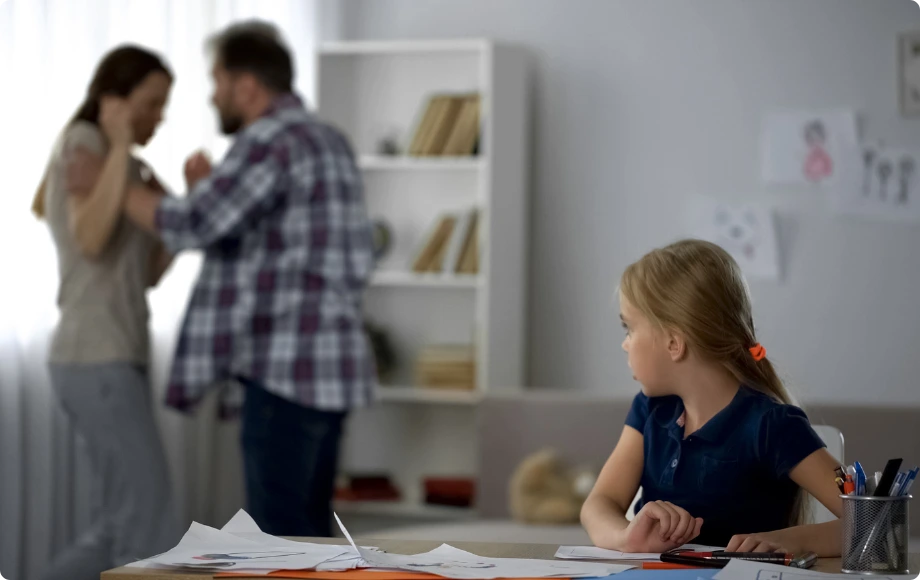
Things to Consider Before Filing for a Protection Order (Domestic Violence Restraining Order)
In most cases, a protection order is just one part of a larger safety plan, that might include seeking therapy, counseling, substance dependence treatment, shelter, filing for government financial support, addressing financial problems, or moving to a new location where you, your children, and pets, are safe. When you file a protection order, your former partner will receive notice and summons, and you’ll likely have to face your abuser in court (unless they choose not to show up).
Your abuser might hire a lawyer to fight the protection order, or to dispute any claims you make. If this is a concern, evidence like photos of injuries, police reports, medical reports, or having witnesses willing to write written statements can be helpful.
The outcome of your protection order could potentially impact future litigation or court cases between you and your partner. For example, if you request limitations in custody in a protection order, limitations a judge imposes could be carried forward when you seek custody when filing for divorce. The denial of limitations could also be the basis by which future unrestricted custody is granted.
If a judge decides to let your abuser visit with the children unsupervised when issuing your protective order, it could be very difficult to request supervised visitation later. You can appeal a protective order if you are concerned that it puts your children in danger, but you must act quickly.
This is why it can be helpful to have a family law attorney help you, if you do decide to move forward with a protection order. Your family law attorney can take the time to understand your goals for protecting children and pets, and present evidence to the court, or build a case that best supports the requests you’ll make to the court.
If you choose to dismiss your case after initiating it, this could be used against you in future custody or family law matters. (It’s important to note that victims often dismiss cases out of fear, or to de-escalate a violent partner’s anger, but the criminal justice system and family law judges may not always recognize this.)
Before moving forward with a protection order, you might want to speak to a family lawyer who can help you understand how filing a protection order could impact your family law or custody case. The family lawyers at Truce Law can help you fill out forms in a manner that can better prepare you for a family law case, divorce, or custody case, or help you file for a protection order in conjunction with your family law case.
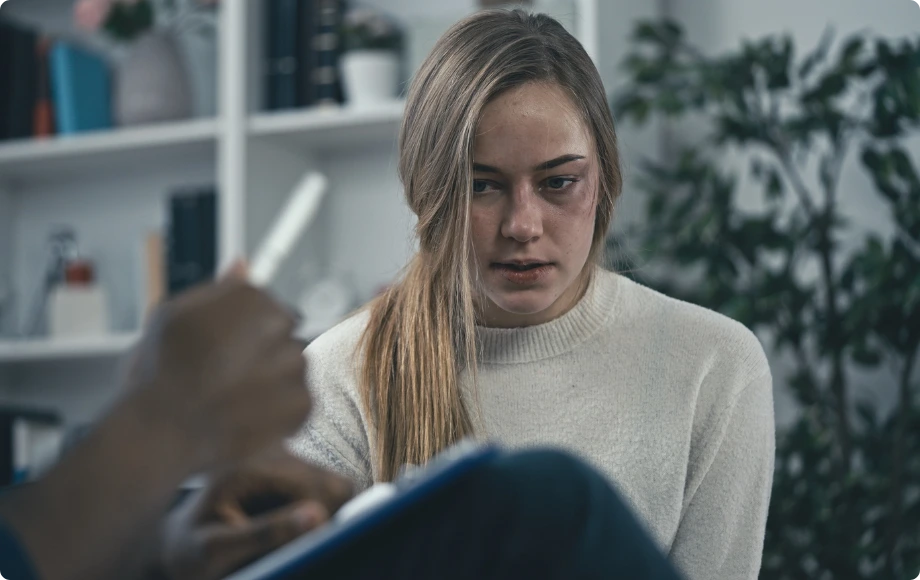
Legal and Personal Risks of Filing a Protection Order
If you call the police to report a partner’s violence, they might encourage you to file a protection order or tell you that the only way they can help you is if you file a protection order (this often happens when there isn’t sufficient evidence at the scene to charge a partner for assault or a crime).
Yet, there are legal and personal risks to filing a protection order. There are valid reasons why people who have been abused choose not to file a protection order. These risks include:
- Filing a protection order can sometimes increase the risk that your former partner could become violent or could become more violent. Individuals in abusive relationships are most at risk of increased violence when they choose to leave, and abusers are more likely to act out if they feel they are losing control. Filing a protection order without a safety plan in place could put you, your children, and pets at risk.
- There’s the risk that the judge might issue a protection order that you don’t want. For example, the judge might permit your former partner to continue to have unsupervised visits with your children. Asking for greater restrictions later (like supervised visitation or limitations) could become more difficult in future family law or custody cases.
- The judge could deny your request for a protection order if you don’t have sufficient evidence. This could embolden your abuser. Coercive control could get worse and violence behind closed doors could increase. Your abuser could use the denial of your protection order against you later in a custody case or family law case.
- If the judge believes that you’re trying to use a domestic violence restraining order to avoid a custody case, you could have difficulty in the future getting limitations on custody or supervised visitation in your parenting plan.
- The judge’s response to your protection order could create a framework for any future parenting plan, for better or worse.
- If you choose to dismiss your case, your dismissal could harm you later in a divorce, custody, or family law case. It’s very common for individuals in abusive relationships to file a protection order in the heat of the moment or an argument and then have a change of heart out of fear or provoking their abuser. When filing a protection order, be sure you’re ready to fully follow through on it, and be prepared to have a comprehensive safety plan in place.
Because filing a protection order can put you at physical and legal risk, you might want to speak to a family lawyer or victim’s advocate before you move forward.
Do I Need a Protection Order?
A protection order is designed to protect individuals who are in danger. A protection order isn’t meant to serve as the basis of a temporary custody order or as a tool to force your former partner to move out of a shared home. You may be able to achieve these goals with a temporary parenting plan instead of a protection order.
If you are in an abusive relationship and are thinking of filing a domestic violence restraining order, it can be helpful to do so with support from community advocates or even a family lawyer.
The Washington state family lawyers at Truce Law can help.
This article is for educational purposes only and does not constitute legal advice. Every situation is unique. For guidance specific to your circumstances, consult a licensed family law attorney in your area.
Truce® Law is a private firm and does not offer pro bono legal services. For low-cost or free legal help in Washington, visit washingtonlawhelp.org.