
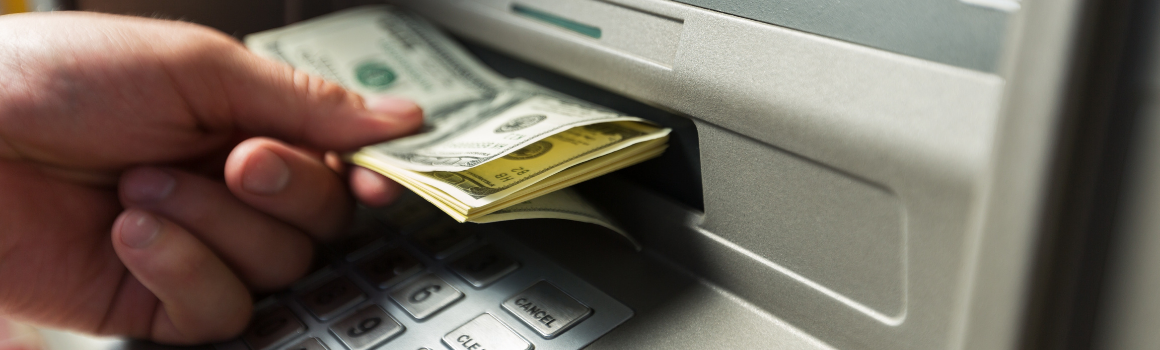
After filing for divorce, you might be wondering what comes next. You need to keep living, and paying your bills, and eventually the question is going to come up—can I withdraw money from a joint account, and if I can, how much?
In the collaborative divorce cases we handle at Truce Law, questions about joint accounts come up in nearly every initial conversation — and the first one is almost always: can I withdraw money for living expenses without being accused of draining the accounts?

Here’s the simple answer—you own the money in a joint account—but so does your spouse.
The good news is that you have the right to legally control half the money in any shared account. If you need to withdraw money to cover your regular living expenses or legal costs, you have every right to do so.
But what if you want to withdraw half the money and put it into a separate account for safekeeping?
And what happens if your spouse drains the account?
These are the right questions to be asking — and the answers aren’t always easy.
Nevertheless, they matter more than most people realize.
Washington is a community property state, which means the rules here work differently from what most people expect. Income earned during your marriage is considered marital income — even if it went into an account with only your name on it. That’s worth pausing on because it catches many people off guard.
Here’s what you need to know to protect yourself — and to avoid the mistakes that tend to make an already hard process harder.
- Avoid withdrawing large amounts of money from a shared account.
- Putting money from a joint account into a separate account won’t suddenly transform the money from shared marital property into separate property.
- Try to maintain the same financial habits you had before you filed for divorce. Continue paying shared bills and debts. It’s generally okay to spend money like you did while you were married.
- While you might have a legal right to withdraw money from a joint account, withdrawing too much could lead to legal issues.
- Shared bank accounts are generally considered marital property and are subject to “just and equitable” division during divorce. This doesn’t always mean that shared accounts will be split 50-50. You might not necessarily be entitled to half the money in a joint account during your divorce, even if you might be legally entitled to access and control half of it during your marriage.
- Washington is a community property state, meaning that a spouse’s name doesn’t necessarily need to be on an account for them to have a claim on money in it, especially if marital income was deposited into the account.
What this means is that a bank account in your sole name could theoretically be subject to equitable division during your divorce, especially if you deposited marital income or marital funds into the account.
The good news is that an account in your name remains under your control, meaning that you can use funds to pay for your divorce lawyer, or to support yourself if you do end up moving out of the family home.
At Truce Law, we strive to help clients keep their divorce out of court. This means that both you and your partner have more control over what happens to your money. The divorce lawyers at Truce Law can help you take steps to protect your money during your divorce, and help you and your spouse divide accounts privately, without having to file public-facing documents

The Importance of Safeguarding Your Accounts During Divorce
If you’re thinking about getting divorced, have filed for divorce, or have been served divorce papers, you’ll want to take steps to safeguard your accounts. Most divorce attorneys will tell you that this means maintaining the “status quo,” or in other words, preserving your accounts as they are; avoid making any big withdrawals, avoid making any big financial changes, or making any big financial decisions.
And while we are talking about joint accounts, here are some other things to keep in mind…
- Don’t cash out your 401(k) or IRA. Retirement accounts should only be split as part of your formal divorce settlement. To divide these accounts without penalty, you’ll need a Qualified Domestic Relations Order.
- Don’t use money from a joint account to pay off your personal credit card or to pay off other debts held solely in your own name. You could end up having to pay your former spouse back for any shared money used to pay off a separate debt.
- Avoid making any major non-essential purchases or big financial decisions, like buying a new car, home, vacation property, or boat. If you are thinking about booking a big vacation, consider waiting. Any big expenses could lead to accusations of using marital assets for your own personal benefit, which can lead to issues during divorce.
- Don’t put anything you own up for sale before you have a divorce settlement, or other formal contract with your spouse.
- Don’t change beneficiaries on accounts. While it is important to update beneficiary designations after you get divorced, doing so before your divorce is finalized can lead to issues.
You should continue to pay your mortgage, household, and personal bills as you always have. While you can continue to make smaller regular purchases, it’s important that your spending pattern generally reflects your spending pattern before you filed for divorce. So, if it is common for you to go out to eat with friends on the weekend, you can likely continue to do so, as long as you don’t suddenly go from eating at a casual dining establishment to a five-star restaurant.
However, if you find yourself getting a new girlfriend or boyfriend before your divorce is finalized, you’ll want to be cautious about any money you spend on meals, travel, or gifts for a new partner. It’s best if funds used for this purpose are clearly traceable to truly separate accounts and lines of credit, or that you put in place a separation agreement to formally separate your finances and living expenses.
Finally, if your retirement accounts are a concern, it can be reassuring to remember that the same rules that apply to joint and separate accounts apply to retirement accounts as well. Washington courts aim for outcomes where both spouses can build a stable future. Most families find ways to divide their retirement savings fairly. Your plan and timeline might need to change, but with careful guidance, you won’t have to leave your marriage without a new plan. At Truce Law, we offer a collaborative divorce process.
This means that we can connect you with retirement planners, financial planners, and other professionals who can help you create a new financial plan that works.

Document Your Accounts
If you are planning to file for divorce, or have received divorce paperwork, it can be helpful to organize and make copies of bank records, so that you have baseline information about your financial health, and information about how money typically moves in and out of your accounts.
Your divorce lawyer or an accountant can later look at these records to identify any irregularities. Other important documents include tax records for the last three to five years, pay stubs, retirement account information, as well as any deeds or titles.
It’s important to keep in mind that you should not try to access a spouse’s password protected account.
If your spouse has sole access to an account that you believe you should have access to, your divorce attorney can help you get required information through the discovery process, or through other legal means.
Community Property Laws and Your Separate and Joint Bank Accounts
If you’re trying to make sense of what’s yours in your joint account, you are not alone. The truth is that you won’t know for sure until you reach a final divorce settlement with your spouse, or until a judge issues a final judgement for your divorce.
Washington state is a community property state, meaning that all income, wages, assets, and debt acquired by either spouse during the marriage is considered community property (marital shared property) and therefore subject to division during divorce (see RCW 26.16.030).
Even if only one partner’s name is on the account or title, the property or account could be considered shared property if it was acquired, earned, or purchased using income earned during the marriage. Separate property can also become marital property if separate funds or an inheritance is placed into a shared account.
What does this all mean?
It means:
- Any income earned during your marriage would likely be considered marital or shared income, regardless of what account it goes into. Putting income into an account solely in your own name does not change the character of the funds unless you and your partner have a prenuptial agreement and keep separate accounts in accordance with your prenuptial agreement, or if there’s documentation of your intentions to keep your income separate.
- Any property you purchase with income earned during your marriage is considered shared marital property. Things can get complicated if you use personal savings from before your marriage as well as marital income to make a major purchase, like a home or car. You may need to trace funds to determine each partner’s share of the property, if this is a concern.
- Any debt acquired during the marriage could be both partner’s responsibility under Washington law, even if the debt is only in one partner’s name.
What this means is that until you and your former partner formalize your divorce settlement, or get a formal separation agreement, the safest thing to do is to assume that any joint accounts, and any separate accounts into which you put income earned during your marriage could be considered shared property and subject to division in your divorce.
Washington state law dictates that property should be divided on a “just and equitable” basis (see RCW 26.09.080). This means that if your case were to go to court, the judge would look at each party’s circumstances, each partner’s separate property, the length of the marriage, and other factors (for example, whether you have children to support) to determine how assets, property, and debts should be divided.
For example, a partner who stayed home to raise the children, or who relocated to support their military spouse might be entitled to more than 50% of the assets and savings, especially if they need time and support to get back on their feet after the marriage is over.
A parent who will have custody of the children might receive additional consideration when it comes to determining who will get the family home.
Even though you technically should have access to, and control of, half of marital funds during your marriage, it’s a good idea to act conservatively until your divorce is finalized. Keeping things out of court, gives you and your spouse greater control over the outcome.

The Benefit of a Separate Account: Access
While a separate account could be considered marital property in a divorce, there are some benefits to having a separate bank account when you file for divorce. Because the account is separate, you have greater control over it. Your spouse cannot just unilaterally withdraw all the funds (unless they have access to the account), and your spouse won’t be able to closely monitor your spending habits (unless you’ve granted them access to this information).
This can be beneficial if you want to speak to a divorce lawyer to explore your options, but don’t necessarily want your spouse to see a charge from a divorce law firm on a shared bank or credit card statement. Having a separate account offers you some financial cushion if your spouse tries to freeze a shared account or if they decide to withdraw money from a shared account when you file for divorce.
Yet, if you’re thinking of filing for divorce and opening a shared account before you file, you might want to speak to a lawyer before you do this. Again, this could be viewed as moving significant amounts of money around without a court order.

What to do If You Are Concerned Your Spouse Will Withdraw Money
If your spouse withdraws money from a joint account, it’s important to remain calm. Even if your spouse puts the money into a separate account, you might be able to receive your share of any money withdrawn through a final divorce settlement or through a court order. Speak to your divorce lawyer about the situation and let your divorce attorney strategize a response. If you don’t have a lawyer, consider reaching out to Truce Law to learn more about next steps.
If your spouse’s actions result in you losing access to your accounts or money, or if you are concerned about how you’ll be able to pay household expenses or other bills because of actions your partner has taken regarding shared accounts, you may be able to file a Motion for Temporary Family Law Order where you ask the court to formally protect property and outline how household expenses will be paid.
There might be other things you can do to protect your access to income, but it’s always best to consult with your lawyer before doing anything like opening a separate bank account and routing your income into this account. If you do this, your spouse may still have a marital claim on any income routed into a separate account.
How Do Accounts Get Divided in Divorce?
Under Washington law (RCW 26.09.080), accounts will be divided on a “just and equitable basis.” Again, this doesn’t always mean accounts are divided 50-50. Courts consider several factors, including the marital property, assets, and debts you and your spouse share; each spouse’s separate property, assets, and debts; how long you were married; and the economic situation of each spouse.
Washington courts aim for outcomes that leave both spouses on stable footing — not situations where one person thrives while the other struggles. A spouse who has significant separate assets and wealth might be required to offer a greater share of joint accounts and shared property to their spouse.
The spouse who will have custody of the children will often receive special consideration when it comes to deciding who will receive the family home. A partner who made special sacrifices to support their spouse’s education, career, or business might also receive special consideration when it comes to dividing assets, especially if their contribution limited their own ability to work, or increased the earning potential of their spouse.
For example, consider the military spouse who relocates to live with their spouse but then finds themselves struggling to find work in a new location, or the spouse who moves to another city where their spouse has a good job or educational opportunity, but then has to re-take licensure tests, or find new work.
Or consider the common situation where one spouse stays home to care and raise the children, while the working spouse furthers their career and their income grows. All of these factors might be considered by the court when a judge decides how to divide joint and separate bank accounts.

Can I Pay My Divorce Lawyer from a Joint Account?
While you can pay your divorce lawyer using money from a joint account, you might want to speak to your divorce lawyer first. If your divorce fees are likely to be high or will be more than half of savings in a joint account, you might want to consult with your divorce attorney before making retainer payments from a joint account.
If you have savings acquired before you were married, or keep a separate account, your lawyer might advise you to make payments from clearly traceable separate accounts. The benefit of using money from a separate account is that it’s less likely that your former spouse will be monitoring this account.

Next Steps
Managing money after you file for divorce can get complicated.
But here’s the simple reality.
Both parties are required to continue paying bills and expenses as they always have. You have the right to continue using money from a shared account to pay living expenses and other personal costs if they are reasonable.
Yet, every situation is unique, and if you have any questions at all about joint or separate accounts, it’s best to speak to a divorce lawyer. The Washington state collaborative divorce lawyers at Truce Law are here to help you take the next steps and can advise you about the best course of action regarding your accounts.
And even if you and your spouse have already agreed to divide the accounts, it’s still a good idea to have a lawyer review your settlement agreement. Most people don’t realize that money in separate accounts is considered marital property, for example. A lawyer can walk you through your rights and leave the final informed decision-making up to you.
At Truce Law, our goal is to keep you out of court. We work with couples to find amicable solutions to some of divorce’s greatest challenges—including dividing bank accounts.
Ready to talk through your situation? Book a Case Evaluation with our team at Truce Law.
This article is for educational purposes only and does not constitute legal advice. Every situation is unique. For guidance specific to your circumstances, consult a licensed family law attorney in your area.